MOVING OUT OF FAMILY HOME

This is an interesting topic for our discussion HJ.
Let me begin by sharing my cultural perception.

I was raised in a culture where girls leave their family home when they are getting married. Prior to that, girls will stay at home with parents. They may leave their fmaily home for education yet they were expected to return once completed. This was the culture I was raised.

It was the same for me Lily. Although when it came to the opportunity to leave home for my career I was “not allowed” to go interstate as my parents considered I was too young to do that. Back in my day 1972-73 and only 17 years of age it was expected I would do as my parents told me.

I think it was discouraged to live with your partner prior to the marriage. This was seen as a immoral act of younger generations. Such perspective may be ease in the modern society yet my parents clearly showed they discourage it.

Yes, it was the same belief back in my day too. There were all sorts of opinions about the type of “woman” who lived with a man before marriage. Sounds so funny today doesn’t it. When I did leave home, and it was to share a flat with my brother (that was acceptable to my parents) and then when my brother decided to travel overseas and it was expected that I would more home, and that was not something I wanted to do, I asked the person I’d been seeing for six months to move in. He said he could yet he would make “an honest woman of me” and would marry me. I said yes, as it meant I didn’t have to move home. Crazy when you think about it in todays context.

40 Heartfelt “Leaving Home” Quotes and Sayings - Home Stratosphere

What about boys?
Boys were also encouraged to stay with their parents until marriage. Majority of cases, they are more likely to live with parents until they have children. Yes, boys only leaves family home when they are ready to build their own family and home. This means that you can find multiple generation household in the culture I have grow up with.

Wow, not in my “world”. My three older brothers were encouraged to do whatever they wanted and travel wherever they wanted. They all moved out of home early for their careers. They lived with their partners and did marry. One brother never married and yet had relationships and children and my parents accepted that.

My brother and my sister-in-law lived with my parents for first few years of their marriage. Then, eventually, they moved out to start their own living and family. In some cases, they may live with parents permanently. Eventually, they become the next owner of the house. Yes, boys were considered as those who take the responsibility of caring for aging parents.

Yes, my brothers believed they would take ownership of the family home once my parents passed or had to leave and go into care. That caused considerable division between them. It was me the youngest and the daughter who was expected to care for my parents near the end. That was still expected of me even when I was living in Queensland and my parents and brothers were living in South Australia.

Now, let me share my experience of leaving my family home before marriage.

The first time when I left my family home was for the education purpose. It was a great opportunity for me to have a bit of taste to live in a shared accomodation. It was a time when I felt isolation and learned solidarity.

After 5 years of living apart, I have returned to my family home, to my parents. I realised that even though we were living together for so long, five years had influenced how I want to live my life. Family dynamic had changed. My family roles were changed as well. I was so uncomfortable to live so called “same old”.

Oh yes, I hear you with this one. Once I left home I never returned to live for a length of time. I may have stayed for a couple of nights but that was it. I found I was being treated as a child and not allowed to be who I was becoming. It was very uncomfortable for me too when I was there. Trying to show respect for my parents while “being an adult” caused internal conflict for me.

Leaving home in a sense involves a kind of second birth in which... |  Picture Quotes

Years later, I had an opportunity to leave family home again. This time to live with my brother’s family. I still live with them today.

When I distance myself from my family home, I saw how I was carefully nurtured in a narrow world. When I lived at my family home, I didn’t need to do housework. Yes, my mother complained but when you get through that storm, it will be done by ‘a fairly’ in a sunny day. Yes, I didn’t want to admit but I was a spoiled child.

It is not what you do for your children, but what you have taught them to do for themselves, that will make them successful human beings.

Ann Landers

When I started living with my brother’s family, I didn’t know how to clean my toilet. I didn’t know how to clean a basin. I didn’t know how to wipe a mirror or a window. I was quite okay with dust because that was the environment I used to live in. My clothes were washed clean and ironed by my parents. Yes, I was spoiled yet moving out of family home, it reminded me I was still a child.

Wow, thank you for sharing so much about this. I was expected to learn how to be a “good wife and mother” so I was taught the way you had to do all these things and more AND to do them the “right” way. Which I later learned was my mother’s way. There is no right and wrong way to clean or keep a house. Yet, I believed what I was “taught” for many years until I choose to “do things differently”. Bit like hanging out the washing. Did you know there was only one way to do that? I’m laughing and being a little sarcastic.

Moving out of family home gave me an opportunity to become a human being responsible to their own act. Even though I had to wash my own clothes, clean my own room, and cook for myself, I felt I am living every moment of what life or living suppose to be. Yet, it is that sense of fulfilment that I am living my everyday life in the way I wanted to live.

Yes, moving out of home for me gave me a whole sense of what life can be and so much freedom to discover a world I had not known and truly spread my wings and started me on my exploration for all that it out there for us. My whole life is about learning, growing, exploring, tripping, falling, flying, creating, challenging, changing, choosing, and sometimes just BEing in the moment and taking it all in.

quotes for children leaving home - - Yahoo Image Search Results | Quotes  about strength and love, Quotes for kids, Quotes about strength

So, my life after moving out of fmaily home, for the first time, my mum asked me to consider living with them again. I asked for a reason and she said “I finally realised how much house work you have helped us. I finally felt that you were contributing so much!”

Whilst I was living in my family home, as I was a fulltime student I couldn’t financially contribute toward household expences, I contributed by doing housework for mum. It might be little tasks like mop the floor, or washing up dishes. It was great to hear that doing these housework tasks helped my mum in some way.

Even though I have left family home for about 8 years now, when things happened, my parents still ask me to consider returning home. For me, having a family home is two side of the coin. On a side, it is the freedom and on the other, it is the sense of security that I have a family home to return to if necessary.

Life isn’t always smooth. If it were, we would never grow and develop as human beings. If we succeed, we are envied; if we fail, we are ridiculed and attacked. Sadly, this is how people are. Unexpected grief and suffering may lie ahead of you. But it is precisely when you encounter such trying times that you must not be defeated. Never give up! Never retreat!

Daisaku Ikeda

As you said HJ, there’s nothing only good nor bad. Everything is may be and it all depends on how we percieve what’s happening around us. Leaving family home wasn’t good or bad for me. It was part of growth in my life.

HONOURING THOSE WHO PASS

After a conversation with Lily I thought I would share my experiences with how the living honour those who have passed.

HJ, what did I say that inspired your thoughts?

Different cultures have different ceremonies and beliefs around how the “send off” their loved ones.

Many “keep” the body until they have enough money to “send off” as is expected in their culture.

Yes, I can imagine there are many ceremonies that I am not aware of.

There are so many different burial rites. Too many to share here. This is a picture from a Buddhist ceremony.

See the source image

My experience was limited as a child. I knew of people passing yet didn’t attend funerals until in my late teens.

I don’t think I had much experience as well. I heard that one of my uncle passed when I was very little. Well, I don’t remember how I have attended funerals though. Well, I guess, my experience started when I was much older too.

There were the Lebanese family who had a full Catholic service and I don’t know what happened after that. Not sure whether there was a burial or a cremation.

Do you have such choice, burial or cremation, in Australia?
I don’t even remember we had such choice in the culture I grow up. Very interesting!!

My first experience of a cremation was “an experience” I have not forgotten. Watching the coffin disappear behind curtains knowing it was going into a furnace and the family being given a container (I wasn’t aware of the term at that time) with the person’s ashes. And then it was what was done with the ashes. Some were put into a Crematoriam and there was a plaque on the front. Some were kept for an anniversary. Some were kept forever. I really didn’t have an opinion on that.

Interestingly, my first memory of cremation was one of my puppies. It was quite sudden because we had to make the decision on the spot. Yet, I knew I have to find a company who does cremation for the pets. I really appreciate how the company organised everything with the respect. It actually softened our sudden loss.

Funerals were something I’m not a fan of attending. It’s also not the way I want to remember the person. I’ve often been criticised for not attending funerals.

I am not fan of attending funerals too. I feel uncomfortable getting close to those who have passed, including pets. I just felt I can’t touch them or getting too close to them.

There were some funerals that I appreciate that I have pushed myself to attend. For me, it wasn’t about how I remember the person. It was about recognising and acknowledging how many lives this person had touched on. Let me share an experience.

I knew a lady for a long time yet I become very close towards the end of her life. When I have received the notification of her ceremony, I have decided to attend regardless of my feeling towards funeral. It was a beautiful ceremony filled with people appreciating and showing respect to her existance. At some point in their life, she had touched their life. I saw so many faces that I haven’t seen for a long time. This might sounds funny but it gave a meaning for her life and celebrating her new departure into the next life.

An awareness and understanding of death raises our state of life. When we are cognizant of the reality and inevitability of death we begin to seek the eternal, and become determined to make the most valuable use of each moment of life.

Daisaku Ikeda
Image result for remembering those you have passed

I was very close to two dear friends who I supported through to they passed. One I helped nurse and the other I visited every day till the end. Both were truly amazing women and we talked about life, death, dying and how to go on living. Both wanted to “protect” their family and friends and as such were not able to truly talk about their feelings, wants and needs. This was the gift I was able to give to both of them. We had such an amazing relationship that we could. Both understood why I could not wanting to attend their funerals. Both agreed with my “why” and with this we were able to become so close, and share so much before they passed. I honoured their love of life, their wants and needs and was able to let go of the judgement of my/our decision.

What an experience.
My brother is an amazing being. In usual time, we don’t call each other. We don’t really connect each other. Yet, out of no where, he called me at the right timing when I am experiencing death of someone. We won’t say much yet I need to admit that he is a good listener and supportive in such times.

A dear friend wanted me to come to his mother’s funeral with him. That was something that I will never forget either. Each one is such a different expereince for those involved. To be able to honour those involved and still be able to BE there for them has been a “struggle” at times. This man was a long time, very close friend and I wanted to be there for him. I also had a relationship with his Mum and as such felt I could do this. It was a cremation.

See the source image

The next funeral was my Father. The circumstances around his passing was complex to say the least. So much went on before, during and after his illness and passing. Once again I made sure I spent as much time as I could with my Dad, discussing what I could, allowing him to share all that he wanted to. I saw my Father cry for the first time. That was in 1992. I was 37 years. My mother did not agree with cremation, even though my father wanted to be, he would do what my mother wanted, even in death. There was a grave side service. That is something I will never forget. For me it was horrific. To watch my father being lowered into the grave. I was beside myself. So was my daughter. She was so close to my father and to watch this, did brake her heart.

When my mother passed it was the same. I spent as much time as I could with her, sharing and giving her the time and space to share all she needed to, to let go. Her funeral was a grave side service as well.

I often ask a question why we do funerals.
It is a ceremony, it is a service.
For what purpose?
For those who are still alive to live on their life. To commemorate those who passed and acknowledging their existance.

I had my loved one passed away when I was in my late 20s.
He lived in another country and I was only able to attend his funeral.
I was then met his family for the first time which allowed me to connect with his family since then.

Different cultures, different beliefs, different rituals.

How do I honour those who have passed?

By keeping the promises they asked me to keep. By keeping their memory alive in the best way I can. To accept their choices without judgement, blame, shame or guilt. To release the survivor’s guilt I had with my two dear friends. Why them and not me? We were all 47 at the time of our diagnosis, and I’m still here. As one dear friend told me, better me than you, you have so much to give to this world. I still struggle to accept that. She inspired me and I take her grit and determination and that of many who have passed, with me every day.

I still talk to my loved one every now and then. He helped me to find my dream that I still live today. I am advancing and thriving everyday because I have a dream that I promised to make it true. I still live with him in my heart.

Image result for remembering those you have passed

Is this culture or learned behaviour?

HJ, I guess, I have been carefully groomed by my parents and immediate environment to act and behave in a certain way. When I was thinking about our topic of this post, I remembered an episode with my grandmother.

Oh Lily this will be an interesting conversation.

Soon after migrating to Australia, my family was living with my grandparents and my uncle. Yes, they have migrated to Australia earlier than my family. We stayed with them for about a month or so. While we were living together, obviously there were plenty of chances to help around in the house. One of such tasks was to help folding clothes.

One afternoon, I was folding clothes with my grandmother. Taking a piece of cloth out from laundary basket, fold it, putting aside, and pick up next piece of cloth to fold. After all clothes were folded, put them back into the basket.
Okay, this is where I find fasinating.

There was a certain order of how to put them back in.
Don’t get me wrong. I had no problem with that. Even I did, as a kid, it wasn’t my place to comment on it anyway.

I hear you. There was a definite way to hang clothes, to fold them as soon as they are taken off the line and yes order to put in piles.

What did my grandmother tell me?
Not to place women’s clothes before or on the top of men’s clothes.
Underwears need to go between clothes so they are not revealing.
When I asked for a reason, she said “well women are dirtier than men.”
I was stunned as a child but now I think what she meant was about menstration. This was her perspective at the time.
Regardless, I was shocked yet this wasn’t the end.
“Well, coming to this country where water is so precious, I stopped washing them separately.”
My grandmother meant that she used to wash men’s clothes and women’s clothes separately because she felt that women were dirtier than men.
I lost my word to react for that comment. I think I have just accepted it as her perspective.

Wow, that’s is a shock to hear that was your experience. I do know of cultures where women are sent away from the homes/villages/communities when they are menstruating, for many different reasons. How sad isn’t it that even today the subject is taboo and considered “dirty” when it’s the incredible process of reproduction of the human species. We as women need to be celebrated for this ability.

To have your Grandmother tell you that, and to believe that, would had had a deep imprint on your psyche. The only time clothes are separated for me was for coloured, whites and the really dirty, oh and tea towels never washed with underwear. Isn’t if interesting what you remember.

Chains of habit are too light to be felt until they are too heavy to be broken.

Warren Buffett

Years later, I have noticed that my mother put them back similar to my grandmother. I asked why? She said that she just did it naturally without thinking about it. Then, she realised that she was once in trouble because she didn’t put it in the right order as my grandmother instructed. So, she doesn’t know the reason why.

The imprint of that experience lasts doesn’t it? I think we’ve all experienced this. Yes, cultural and yes to learned behaviour. A blend of both

To me, I learned along the way, you know, culture is behavior.... | Picture  Quotes

My mother was the youngest girl in her family so when she married to my father, she didn’t know much about housework. Obviously, married to my father, the eldest son in the family, all housework are now my mother’s shoulder as a daughter-in-law of my grandparents. My mother was carefully groomed by my grandmother to follow her rules.

Old habits are hard to break, but not impossible!

Pearl Cleage

Years later, I have noticed that I did what my mother did, following the rule without taking too much notice.
My sister-in-law asked me about why? and I couldn’t really answer her. Because, I know the answer I got from my grandmother would be so illogical to the modern society. I tried to explain yet unsuccessful because I questioned it myself.

I so hear you here. I just followed what my mother taught me. It wasn’t till years into my living independently from my family that I started to question “why” and also what would happen if I didn’t do the things I was taught the way I was told they need to be done. Simple things like, “make sure the dishes are always done, bed always made, floors swept etc before you leave the house”. Right down to the “good dinner set for parties” , “the everyday dinner set” and “the picnic sets”. Pillow cases must be ironed, tea towels too. The list just went on and on. I was so surprised how hesitant I was to change these practices. Now I do if I can, and if I don’t well, they will get done at some stage. Are they truly that important?

I think it’s important to realize that you can miss something, but not want it back.

Paulo Coetho

What I do these days?
I ask what they would like me to do? Do they have any problem with the order? Just in case if they have one of such rules.

Yes, it’s interesting isn’t it. When I stay with others I try to follow what they do. With my daughter, she has definite ideas about hanging clothes, folding them etc. If in her home I follow what she wants. Not worth trying to force “my” way as I was raised with the belief there is only one way of doing everything, my mothers. And it took me some time to realise there are so many way of doing everything and the world won’t come to an end if you do.

So, piling folded clothes in a certain order, is this culture or learned behaviour?

Great question. For me I think it’s a cultural behaviour “habit” passed down through the generations due to certain beliefs and not questioned. I know I was not encouraged to ask why. The answer was always “just to it this way, and if you can’t, leave it and I’ll do it” hear that long enough and you don’t bother.

There's more than one way to do things. #Respect other's model of the  world. #nlpcoaching #curiosity #kindness | Nietzsche quotes, Nietzsche,  Words quotes

Bridging between cultures

HJ, have you heard of the phrase “culture brokering”?

No Lily, I haven’t. I’m interested to hear your experience.

Culture brokering is an ancient concept. Culture brokering is about a person becomes a bridge between two cultures. Culture brokers are the middlemen, negotiators, or brokers between the cultures. Culture brokers are the advocator of a culture to another culture. So, culture brokering is the act of bridging, linking and/or mediating between cultures for the purpose of reducing conflict.

Sounds a little like my work as an advocate for those you felt they could not speak up for themselves or were not being heard by others, Government Departments, Agencies and the like.

What about the phrase “child culture brokering”?

No I haven’t heard this phrase either. Must admit doesn’t sound like a healthy term.

Yes, it is the role given to a child who act as a culture broker, particularly for their parents. Research has shown children are more likely to adapt/acculturate faster than their parents. Therefore, immigrant children are likely to uptake this role as a cultural broker for their parents.

Ok, sounds similar to children who act as the voice/ears/hands/legs for parents who have hearing loss, injuries that cause them to need assistance with everyday personal needs. I’ve support families who have not been able to get assistance and need to rely on their children for daily activities.

I have come across this concept of “child culture brokering” when I was exploring experience of refugee mothers. Only then, I have realised that I was acting as a child culture broker. I remember I accompanied my parents to majority of their medical appointments. I remember I felt uncomfortable when I was the “middle person” assisting them with their business. My parents did go to English classes when we arrived, yet that probably wasn’t enough for them to live in mainstream culture using English.

Oh Lily, I can only imagine how difficult that would have been for you. A huge responsibility for you. I know the pressure being the “interrupter” between parents and businesses/organisations/other adults/agencies, etc that the children felt with the families I supported as mentioned above. The children felt they had to be the adult, and were involved in decisions that, in many cases, children did not need to be.

I have obtained my secondary and post-secondary education in English. I have obtained my primary education in Japanese. Yet, my parents speak their mother language which is Chinese.
I can read/write English and Japanese and I can only read/speak Chinese.
What does this mean?

Wow Lily, I do hope you are proud of all you have achieved in all three languages. That’s significant. To be able to read, write and speak Japanese is truly amazing in my world. As we’ve discussed I learnt Japanese for fun and travel and it’s not that easy, there are so many “different” versions. And you are fluent in three and can write as well. I’m impressed.

Let me illustrate this using medical interpreting example.
I have obtained knowledge of secondary schooling onward in English. This means that any specific medical terms were obtained in English. The next well spoken language that I have kept learning was Japanese. So, it was easier for me to interpret English to Japanese than to Chinese. Even though some words in Japanese are closely related to Chinese, I still had trouble getting the “correct” meaning to my parents.

Translation is not a matter of words only: it is a matter of making intelligible a whole culture.

Anthony Burgess

I can imagine how difficult that was/is for you. To interrupt into one language yet via a language into another, sounds way too difficult. And I do know some words and phrases don’t translate. There are not the words for come things in many languages. How difficult it was/is for you to try to make sense of what you are hearing, especially medical terms, from English, then Japanese, then Chinese, let alone being able to have your parents understanding what is being said in the first place.

I am not a professional interpreter and I never been trained to do so.
Yes, I was caught between cultures. It was hard to explain when I don’t know what to say or how to interpret for my parents. I felt frustrated when I can’t find the exact word that I needed to say.

I so hear what you are saying. I have been in the situation, when working with migrants, trying to explain English in my role as a Literacy tutor. Some explanations are not appropriate and certain subjects are not discussed between females and males. It can be so difficult to know what you can and can’t say. Such a huge responsibility for children.

Back in those days, we didn’t have access to internet. We didn’t have translation machines that we can use on hand. We only had heavy dictionaries. Yes, later in my life, I realised that we were still lucky to have access to dictionaries.

Yes, I often wonder how we were able to “function” without the internet. My dictionary came with me everywhere. I still use the “hard copy” with my Literacy work with migrants and with the school leavers struggling with English.

Translating literary works… requires much more than exchanging one word for another, more than trading sentences between langauges. It requires an understanding of the author’s message to capture the vision, the essence, of the writing.

Susanna McLeod

During a research project, I have encountered a group of refugee mothers who shared their experience of adapting in the new culture with me. They have told me that there is no dictionary translating English to their own language. In fact, many of them were illiterate. Even though they are attending language school hoping to improve their English proficiency, as their children adapt faster than them, they had to rely on their children. This group of refugee mothers told me that they have not access to interpreting services because no one can interpret to their native language.

How difficult for them. This is something that is so important to be addressed. It’s difficult to believe that there are not interpreting services in all languages for all the people we have in Australia. We pride ourselves with our multi cultural culture and yet there are groups who feel this way. Their experiences really do need to be addressed. I have heard of a few communities where one person has been able to step up and has been able to learn English and acted for the rest of their community. Yes, to be illiterate and then trying to learn a new language, well I can’t imagine how difficult and frustrating that must be. And the pressure being placed on children to try to understand what they are being told and then trying to translate into their first language.

Some mother expressed feeling of incarcerated in their home when their children are at the school. Mothers were grateful that their children can now attend school. However, mothers said that they had to ask their children to miss their school because they need their children to become an interpreter during a medical consultation. Some mothers had also expressed that asking their children to become an interpreter is not a preferred choice yet this is the only choice they had.

How difficult for the family. Hard to believe in this day and age, there is not an interpreter available for medical consultations. The doctors, hospitals etc must know of the issue and as their “duty of care” need to make arrangements to have the assistance needed, other than using children to translate. It’s a huge burden for these mothers and their children.

Without translation, I would be limited to the borders of my own country.

The translator is my most important ally.

He introduces me to the world.

Italo Calvino

Have you lived in different cultures?
Have you become the bridge between cultures?
What was your experience like to live as a bridge between cultures?

Great questions Lily. I do hope there are others who will contribute with their experiences.

LANGUAGE – How we speak in different environments/cultures/situation

Image result for languages picture quotes

(HJ) The language we use with our parents, with our work colleagues, with our bosses, with politicians, doctors, people of influence, our children, our best friends, our casual friends and more.

HJ, yes, isn’t that interesting of realising that we use language differently, depending on the situation, environment, or who we talk to. Certainly, I have reliased that I tend to use English to all unfamiliar individuals.

This came up for me when I was discussing learning languages. I took a 10 week course to Learn to Speak Japanese for fun and travel, as I always want to learn a few phrases of the Country I’m visiting and this was part of my determination to visit Japan one day.

Learning a new language for me was part of everyday living. I had no choice but to learn the language if I want to survive in the new country. So, learning a new language wasn’t really a fun thing, rather, it was relating to the survival. I had some intersting experiences regarding learning new language. It prevented me to communicate with others and I felt frustrated when I couldn’t understand.

Language is the road map of a culture.
It tells you where its people come from and where they are going.

Rita Mae Brown

If you talk to a man in a language he understands, that goes to his head.

If you talk to him in his language, that goes to his heart.

Nelson Mandela

The young woman who took the class had recently arrived in Australia and was married to an Australian. Her English was so good, even though she didn’t feel confident. It was through these classes that I learnt the Japanese have a language to use for friends, for family, for elders and for people of influence. To use the inappropriate language was an insult and considered disrespectful.

Yes, I understand. Insulting is a very strong word, and yes, I think I understand the context you are using in. I think I will see that as inappropriate in the scene/situation which may lead to others felt insulted. Well, that’s their perspective though. Growing up in Japan, I think I had trouble learning that part of their culture. Even though, language changes as the time changes, I might have offended someone unintentionally. Therefore, I believe it is the heart rather than formality. I got in trouble sometime when I said things that wasn’t meant to be said at that given time. Well, what do you say? “Read between lines?”

Image result for languages picture quotes

Do we have the same in Australia?

I think so. It dosen’t really matter which culture/country you apply this language in, yet, there is always appropriateness to discuss some matters, situations etc. Well, otherwise, we won’t have things called different genre in writing or Business English and Academic English as a standing alone category.

Well growing up I was taught there was. No way would I swear in front of my parents. They never swore in front of me. I was not allowed to speak to adults unless invited to speak.

Yes, I understand. So, is that morale? or etique? or manner?
For me, these sound like similar to our other post, seating arrangement.
It is about formality. It is about appropriateness.

I had so much fun laughing, and using all sorts of words (many I didn’t know what they meant) with my friends growing up. It was always in secret.

Learning another language is not only learning different words for the same things, but learning another way to think about things.

Flora Lewis

I discovered the impact of language when my daughter was only about two years of age. She started bumping into things or dropping things and would say “shit” !! I was so shocked. Where did she learn that? Yes, it was from me. So I stopped.

Yes I agree with you children learn very fast from adults. I have learnt this from my niece.
One day, I was discussing a political matter, national conflict, in front of my niece, who was about five years old then. She asked “So, why two countries are fighting each other? They should do something to metigate that.” This wasn’t really about the language, but it was about the content matter that she was picking up from just listening to the concversation between adults.

To this day I still don’t swear in front of children or my elders. It’s a respect thing. It’s something I see little of these days. I maybe “old fashion” yet I like to show respect for others and I do believe swearing shows a lack of language ability (as outlined by a professor of Business English). In business back in the 60’s 70’s 80’s 90’s it was considered an insult and extremely disrespectful to everyone involved.

This is very funny you said that. I felt uncomfortable when I heard my father was swearing in front of my grandparents and his siblings. This was just the beginning. Then, he start swearing in front of his close friends too. I was very uncomfortable by just listening to that. So, I have decided not to swear in front of others. Only when I really can’t any other words to express my feelings at that given time, with a permission from the listener.

I can remember a time working in the front bar of a hotel and of course being a front bar, anything goes especially language and you accept that. It’s all about the environment for me, the language you use. It’s also how you want to be seen. I truly believe you teach people how to treat you. There was a time when a guy was swearing and using very “colourful” language. One of the regulars pulled him up and told him not to use that kind of language in front of a lady (which was me). I loved this guy. He was like a Dad to me. I thanked him and told the other guy to not “f**king” swear in front of me. The whole place burst into laughter and that changed everything. Surprisingly they all watched what they said in front of me and I didn’t swear again.

Wow, HJ.
I’ve never been in such situation so I can only imagine. I think I have tendency to just walk away or put a shield up that I don’t want to interfere with you.

A person who respects others is respected by others in return.

Those who treat others with compassion and concern are protected and supported by others.

Our environmnet is essentially a reflection of ourselves.

Daisaku Ikeda

As far a diffrent cultures go, I always made sure I learnt how to be respectful with language and with actions. My belief is if you visit another country you respect their culture and follow what is appropriate and not while there, whether you agree or not. Otherwise don’t visit that country.

One day, I was travelling around my mother country and felt very uncomfortable seeing international maides gather at the main station. They just had no other place to be. I was also surprised locating a special counter for them at the airport.
Years later, I had shared this story with a person with immigrant background. She also said her daughter experienced something similar and that made them uncomfortable to be there.
I guess, for me, growing up in another country, my morale ethics had changed which does not fit into morale ethics of the home country. This is the time I appreciate where I am in my life.

Image result for languages picture quotes

I experienced that again in my travels. Different Buddhist Countries do not allow women to be touched. Having the red bracelet attached to my wrist and tying every so carefully as to not touch my skin. Monks and Nuns do not hug or touch and as a woman you can not hand food or anything else to them. It has to go through a man. Now, in the beginning this was a struggle for me as I’m a very strong woman and did not like being seen as “less than” until I realised that was the meaning I was giving to this practice. Within this particular Buddhist practice it was just what it was with no meaning.

That’s an extreme!
I would found that uncomfortable yet I agree with you that it is the respect of their culture. I am not there to question their morale or ethics. I am there as a short-term visitor who will be experiencing their culture. I also believe that regardless of their culture or believes, we are equal human being so we can explore common understanding if necessary.

Our ability to respect others is the true mark of our humanity.

Respect for other people is the essence of human rights.

Daisaku Ikeda

I so love all that I learn preparing to travel to another culture. Their language, their beliefs and their cultural practices. Some are too shocking for me to visit their countries and that the wonderful thing about having choice.

Image result for languages picture quotes

Parent-child relationship: Is this universal?

Disclaimer: I am not a parent so this is my view as a child of my parents.

Image result for pictures parent child

HJ, I think how parents interact with children may influenced by the culture. Well, yes, in itself, family is a culture. I think what I am trying to say is there is a trait of how culture interfere with parent-child relationship.

Yes, Lily I agree with what you are saying. In my experience (as a child and as a mother) it’s the family culture within the heritage culture. Plus the generational culture. Yes, it get’s complicated yet, my experience spans 60+ years and the parent child relationship has changed as I changed. My daughter taught me how to have an adult relationship with her and I was able to teach my mother (as an adult) that I was no longer the child and would accept being treated as one. That was a struggle for both of us, yet I decided it was necessary for us to have a healthy adult relationship.

Image result for PARENT CHILD RELATIONSHIPS PICTURE QUOTES

I remember one day, I shared my episode with my mother. My episode was like this.

I’ve visited my mother one day. As you know, recently, I have changed how I interact with my mother.
When I was about to leave home, she handed me two bags full of groceries to take home. Yes, I did told her that I can’t have so much but she said “take it regardless.”

I remember when I shared this episode with you, you replied without a surprise “Yes, that’s mother thing.” Part of me was surprised with your response because I thought that was culture driven.

Yes Lily I remember that conversation. And yes, it was mother thing from my experience and from what I experienced with my friends. I think it’s also a generational “thing” too. I must admit I don’t do it now with my daughter. I do take something each time I visit. That’s something I do when I visit anyone. I grew up with that practice and I love it so I continue doing it. I don’t do it for any other reason than the joy it give the other person. It’s not a practice I see very often from others these days and that’s ok. Maybe they have not grown up with that practice or ???? who knows. And that OK.

In the culture I grow up, son/s take on the responsibility of taking care elderly parents. It is almost like obligation of born as a son.
It seems like parents seek for financial and material support from their son, and if possible, they seek emotional comfort from their daughter. Yes, once daugthers are married, they belongs to the other family.

It is common in the culture I grow up, son and his partner will live with parents after their marriage. They are likely to share their house. Then, the married partner are likely to become responsible for all domestic matters. Many young family choose to start their own family departing from their current house. I know this is probably not true anymore in the modern society. I have many friends who were married to the family, lived with their in-laws, and raised their children there, particularly if your married partner is the only or the eldest son in the family.

Lily, it was like that in my family, supposedly. As the youngest child so much was a given that I basically only heard about. My eldest brother was the “golden child” and yes, it was almost expected that he would take responsibility for our parents if they were not able to. That did not happen. It was the hope of my mother yet, all they wanted was to do what “had” to do with the least amount of responsibility or effort.

Yes, I guess I was a sort of emotional comfort for my mother. I later discovered the narcassistic behaavioouor of my mother and he approach to our relationship. The emotional comfort my mother got from me, what when my life was a mess. And yet in the last few years of my mothers life, it was me who focused on her health and wellbeing. Right up to the passing of both my mother and father, my brothers were the ones that we looked up to.

The parent-child relationship in the home usually reflects the objective cultural conditions of the surrounding social structure. If the conditions which penetrate the home are authoritarian, rigid, and dominating, the home will increase the climate of oppression. As these authoritarian relations between parents and children intensify, children in their infancy increasingly internalize the paternal authority Picture Quote #1

No, not my experience with daughters. We stay close to both families (or as close as is possible) when we marry.

It is common in the culture I grow up, yet to be married siblings might still live in the house when the eldest son got married. This means that the married partner are now become responsible for caring these siblings too. I think this might be driven by the culture too.

Not in my experience. It was a given that you would move out with your husband/wife and start up your own home and family. Yes, I think your experience was culture driven. Although look at what is happening in Australia today? More adult children are moving back into the family home or having their elderly parent/s into their home.

I’ve given that quite a bit of thought as I have long time friends from many different cultures and maybe that practice has filtered into the Aussie culture in some aspects for many families.

I think underneath these act is the value of ‘filial piety’; a virtue of respect for parents, elders and ancestors. This means that you will be seen as “unfilial” if you put your parents to aged care facilities. It is the obligation of children to look after their parents at home.

I had not heard that term. Thank you for the explanation. For many families it is not an easy decision to put elderly parents into care. For others, they rush that decision for what appears to be convenience. Regardless of the individual decision and from my work in Aged Care, as long as the person/people involved are getting the best possible care, that’s what is important. I do feel if they are able to stay in their home, it is so much less stressful for them. Many go into deep depression leaving the family home.

However, recent years, these trends are changing.
I saw many people are open about aged care facilities and type of the support they seek from the children. It is not necessary for the eldest son to care for the parents when they are older. Daughters can now care for their parents when necessary.

How does culture influenced your relationship with your parents?

My relationship with my parents was as the youngest, the daughter and with that came the expectation of the geneerational cultural expectation of what a “girl” was expected to do and be. So many expectations. My brothers were “allow” to be so much freer than I was as males were almost seen as “superior” and dfemales were to do whatever to keep them happy. My mother ruled the house, yet cam across as if it was all for the men. It was quite a complex environment I grew up in. It was the 50’s, 60’s, and 70’s that I was living in the family home. I knew when I got married and moved out and started my own family and set up a home I had to “prove” myself so capable of doing just that so as not to shame my parents. That’s a whole other conversation.

Image result for broken parent child relationship quotes

The origin/meaning of your name

Image result for what's in a name picture quotes

HJ, do you put meanings in English names?

A name is a term used for identification. They can identify a class or category of things, or a single thing, either uniquely, or within a given context. The entity identified by a name is called its referent. A personal name identifies, not necessarily uniquely, a specific individual human.  wikipedia

I do not agree with this. Isn’t it wonderful that we can choose how to see ourselves and what we value and believe. I will share more during this conversation.

In my culture, we do have meanings in each name. For some culture, it might be the meaning in each character of the name.
Do you know the meaning of your name?

“Heather” is a scottish flower. It blooms for only 6-8 weeks of the year. The rest of the time it’s “the dirty brown stuff” on the side on the roads. I found this so funny when I first came across it on my travels through Scotland. I so wanted to see it. I was there in May and it only flowers in September. So of course I had to go back then. It was beautiful. It was at that time I saw the significance of the comparison. “Heather” is so revered in Scotland with the Scots and yet it only flowers for such a short time. Well, I decided I was no the dirty brown stuff on the side of the road and I would flower every day. I do hope you are laughing, cause it is funny yet has a message.
Be the change you want to see in the world and share with others.

A name is so important. A surname connects you to your past, to your family. Even a given name has meaning – why did you parents pick that particular one?

Kelly Armstrong

In some culture, a part of the name (character) is predetermined by the generation. I had a friend who were in this situation. He had two characters to his name but the first character is predetermined.

How interesting. For me in my family, the name “Elizabeth” was the family name to be carried on to each daughter. Hence I am “Heather Elizabeth” my daughter “Michelle Elizabeth” my mother was “Elizabeth Grace”. Same with the males in the family.

I had my so called ‘Chinese name’ that’s different to my English name. I have chosen my own English name, ‘Lily’. Because I have lived majority of my life with the name ‘Lily’, if someone, other than my parents or relatives, call me by my Chinese name I won’t react. Simply because I hardly use that Chinese name in real life.

How did your parents react to you wanting to choose your English name yourself? In my family and many of my friends at the time we used “nick names”. Shortened or sometimes lengthened versions of our name. I had “Heddy” “Hev” “H” “Bert” (my surname was Gebert) “Jones” and on it went. It was something the “Aussies” did. My Greek, Italian, Egypian, Lebanese “families” had “nick names” too. It was when I discoverd the different name for Grandparents, Aunties, Uncles, brothers, sisters, cousins and friends. I so loved learning all the different terms.

Identity is not just who you are currently, but who you are called to be. … When you are born, you are given an identity through your name. A name helps differentiate you from others. While every culture’s naming methods differ significantly, the impact of a name on identity is intercultural.

My disruptive thinker cap goes on when I read this. We would both love to hear your thoughts.

I have chosen to call myself Lily not because of its meaning. It was simply because only four letters to remember! I know some Chinese parents will given their kids a English name together with their ‘Chinese name’. I have found this very fascinating.

This has reminded me about my curiosity of asking for the meaning about name. When I have attended a conference, I met people from different continents. I started asking for the meaning of their name. Simply, I thought it might be easier to remember their name in their language.

That’s an interesting concept. I must admit it’s not something I do. I’m more interested when I’m introduced to someone and they use their birth name and I will ask the origin and then we discuss their culture. I find it an interesting way to “break the ice” and have a conversation.

A gentalman asked, “Why do you ask for the meaning of my name?”
I answered “Because I want to know what does your name mean in your language. I believe in the meaning of the name.”
Then, he told me the meaning his parents had given to his name which was ‘rising sun’.

How wonderful when parents tell their children why they gave them the name they did.

What’s in name?
Nothing is there in a name until you give it a meaning. It’s just a word, but if you put it in a right way, it becomes your own identity. Make it worth in a way so that your name becomes the reflection of you.

Aalo

Even though I have chosen my own English name, living with it, I think I have given it a meaning that is now reflecting me. I had many friends who told me that I live like my name. Well, yes, I am proud of being Lily.

Wow, that’s empowering Lily. I must admit I don’t “identify” with my name. It’s just a name to me and not who I am. I am so much more. Even when I married and took my husbands name and then when we divorced I kept it cause it was just easier. I didn’t see it any other way. When the same thing happened to my daughter the first thing she did was to change her surname. She saw it as still be “attached” to him. It’s so interesting how we see our names and if we “identify” with it or not.

Image result for you are not your name picture quotes

What’s the meaning of your name?
Do you give your name some meaning?
Is that the name you want to live with?

THE GLORY BOX / HOPE CHEST

Is it a practice still today? And what is it?
I (HJ) can’t remember what mine looked like, yet I think it was something like this one.

glory box chest | Got Free Shipping? (AU)

from wikipedia

What is hope chest HJ?

hope chest, also called dowry chestcedar chesttrousseau chest or glory box is a piece of furniture traditionally used to collect items such as clothing and household linen, by unmarried young women in anticipation of married life.

The term “hope chest” or “cedar chest” is used in the midwest or south of the United States; in the United Kingdom, the term is “bottom drawer”; while both terms, and “glory box” are used by women in Australia.

(HJ) Funny how important it was when I was in my teens way back in the late 60’s early 70’s. It was something you did. I was so excited and when my brother started working for “Smart Time” I bought so much and paid it off in instalments.

So what is ‘Smart Time’?

Smart Time was a home selling company. Bit like Tupperware and Amway. They sold all the things you were “supposed” to have ready for your new home when you got married.

OMG there were floral purple and pink sheets, dark brown stone wear flower 8 person dinner set, and two magnificent cutlery set for 6 and 8. One I still have to this day. There were sets of towels, table clothes, and ………………….

So, you collect them as you get older? or is that given to you?

Yes you did. And yes, you were given things to add, especially after you got engaged in the lead up to the wedding. Everyone got so excited to help you build it up. It was almost a prestige thing. The more you had the “better” you would be as a wife and mother (shock horror)

I so loved embroidery and so made place mats, table runners, and decorated tables clothes for fancy stitching. Little did I know laid ahead.

So you made as you get older? That’s interesting!!
I love embroidery but I don’t think I grow up with such tradition.

I was so excited to set this up. I truly have no idea why. It was just something you did and it was excited to think you would one day, set up house. Funny now to think I was raised that the ultimate for any woman was to be a good wife and mother and what that meant and what was expected to reach that goal.

I think I was raised up with that notion too. “Be a good wife, and mother.”
My maternal grandmother was awarded for her motherhood. She taughted me that keep going regardless of my gender. Even though, my maternal grandfater was very gender oriented. Well, that was the culture.
Recently, my mum asked me again “Aren’t you worried that you don’t have a partner?”
My answer was “Thank you for asking. I am having a great life!!”
Yes, she didn’t know what to say next.

THERE IS A WARNING WITH THIS QUOTE. It’s explicit yet when I found it, it so spoke to me about the belief back in the 60’s and 70’s and probably still today. Definitely not by me. There might be a shock factor, yet I feel this is something we need to look at and be aware of. We as women, please, don’t be this kind of woman. This belief I believe leads men to think they have power over us to do as they want. This is not a healthy relationship.

Quotes about Good wife and mother (41 quotes)

You always had a good dinner set, an everyday day dinner set and a picnic set. It was the same with glasses, cutlery and table clothes etc. It was just what was expected and to be the best wife and mother you had to keep up the standard.

Sad to think you were judged by this standard.

In my or my parents’ culture, I think there were certainly rules to such custom, like what bride need to bring to the new family. Similarly, what gloom need to give to the bride-to-be. It is the preparation for the new departure for the couple yet it is about the ‘custom’.

Today with so many moving in together I must admit I haven’t seen this old tradition happening.

Well, I thought my family is not going through this custom anymore. Yet, it still existed. I was very shocked it still existed!!
I have realised such ‘custom’ when my brother married. It was about material wealth. It was about money. Even my generation doesn’t care, my parents cared.

Today I am a minimalist. I have odd pieces of crockery and I love it. I purchase one of two items that I love. I don’t have a good set, and every day set and a picnic set. I have one set with many pieces.

I see that as realistical.

5 Minimalism Quotes to Help You Design a Simple Life

Towels I have I’ve had for awhile now and they don’t match and the world didn’t come to an end.

Sheets match and well they do the job. It’s funny to think back to those times and how important it was.

Only when you question the ‘custom’ and why, you realise whether it ‘must be’ or ‘can be’.
These days, I question many used ‘custom’ and ask why we do certain things in certain way. What is the purpose? Why we do that?
In my culture, we have festival dishes. When I ask why we have certain dishes in certain time, it matches with the ‘tradition’. There were meaning behind it.
I guess, once I know the meaning behind each ‘custom’, I can choose whether it is necessary or not. It is still relevant in the modern life or not.

I guess I can only say I love how I live these days as I’ve lived through all that. I did enjoy setting up house for the first time with my husband and I’ve always enjoyed entertaining and sharing great times, food and wine with people. What I have realised is that at the end of the day those who are more concerned with you having a certain standard of crockery, cutlery, glassware etc are not the people I want in my life.

I love those you want to share their time, their food, the presence with me and others and these things are just that, things and it doesn’t really matter if they match or not.

Mismatch is fun.

Pin on Quotes & Lyrics

ACCULTURATION – what does it mean?

Enculturation and acculturation

Description

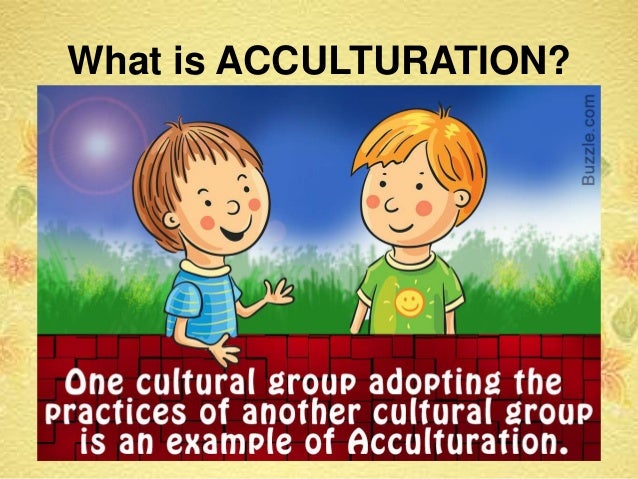
Acculturation is a process of social, psychological, and cultural change that stems from the balancing of two cultures while adapting to the prevailing culture of the society. Acculturation is a process in which an individual adopts, acquires and adjusts to a new cultural environment.

 Wikipedia

Lily, when I (HJ) found this word in your thesis, I must admit I had no idea what it meant. Which lead me to go research. Hence the description above from Wikipedia.

Well, HJ, very funny you said that. I didn’t know the word ‘acculturation’ when I started my study. Yes, studying acculturation helped me understand my own experience of going through that. It made so much sense after understanding it. I know see acculturation is the adaptation process to a new culture, and it is the choice of new comers to decide which part of culture they want to retain or adapt.

My journey of acculturation is an interesting one because I had few cultures to jaggle. For me, acculturation is a continuous negotiation and choosing which part of culture I want to retain, adapt, or create a new one! Isn’t this an interesting concept? It is not a simple straight decision making. In many occassions, it was try and error and try again.

My experience with this have been short term. When I’ve travelled and chose to live with locals and so I needed to learn, adopt and yes adjust to their culture.

I guess, yes, length of stay in that culture gives you opportunities to practice with that culture. More than that, it is your willingness to learn, adapt, and change. Research had shown that when a person can embrace both culture, they are less stressed about the differences and can celebrate both cultures.

Learning a foreign language, and the culture that goes with it... - Michael  Gove | Lifehack Quotes #lear… | Learning quotes, Culture quotes, Foreign  language quotes

An experience that stays with me today was on a trip to Bali. I chose to stay in Legian as I didn’t want to stay in the tourist resort of Kuta. I had been to Bali before, but it was for a trip through the Kintamani Mountains on road bikes. That was a trip of a life time. Another story.

I haven’t been to Bali before. It must be an advanture!!

On the particular trip I organised a private driver to take me to special places of significance to the Indonesian culture. Along the way I learnt much about the different sights. I could also communicate in Bahasa (local language) . This is a practice I always do when visiting countries as a sign of respect.

Wow, HJ. You must have learnt so many different languages.
I like to visit places where I have a local friend. I ask them to take me to resturants that they eat. I guess, I want to try their local food. I love food. It is another form of the culture.
So, where did the private driver took you?

At the first temple we came to the driver organised for our entry and ask me, very casually, “are you bleeding?” I was so shocked. No one has ever asked me that. It took me a moment or two to realise he was referring to “menstration”. Still shocked, yet I was in my 30-s and aware that women with their periods are ostracised in some cultures. I was in their country and I will always respect the culture and their practices. Luckily I “was not bleeding” and was able to explore the incredible structure and learn more about the history and significance of this.

For my experience in Australia, this was not a subject you discussed with men. And yet, when you are married or living with a man, it’s something you need to be able to talk about.

I think every culture have ‘taboo’ topics. I remember I had several topics that I felt uncomfortable discussing with my parents. For example, I wanted to sign the form for ‘organ donation’ but my mum didn’t agree with the idea. It was a topic we, as a family, never discussed before. She was surprised that I had such intention.

Cultural experiences for me in Australia included growing up with Greeks, Italians and Egyptians. They were all my neighbours and I so enjoyed learning about their cultures and how they were able to embrace the Australian culture.

That is very deiverse! Wow.
Australian society had told me the diversity of culture and how each people integrate them into their life, which creates another ‘new’ culture. As no one person is same in this world, I call that ‘uniqueness’. No one person experience the life in the same way as you. I believe it is the Australian culture that allowed me to embrace who I am and have a choice in how I want to be.

The differences between people need not act as barriers that wound, harm and drive us apart. Rather, these very differences among cultures and civilizations should be valued as manifestation of the richness of our shared creativity.

Daisaku Ikeda
Quotes about Multicultural society (27 quotes)

I struggled with what I was lead to believe was what a woman was supposed to be, and how to behave was my experience rather than perhaps and cultural thing. I’ve been through so many changes to what I’ve seen as culture in Australia in my 65 years. Thankfully in many areas it’s become more about freedom for all and acceptance of our differences and yet we still have a long way to go.

Yes, many things takes time to change. I don’t think we can change a culture or society overnight. I am also aware that if we don’t act, nothing will change. It takes some courage to step out of my comfortable zone and expanding it each day.

What may look like a small act of courage is courage nevertheless. The important thing is to be willing to take a step forward.

Daisaku Ikeda

As an Australian I see our culture embrace and include different cultures who choose to live here who follow our beliefs and cultural structures and “rules”. Those who choose not to follow or conform are ostracised as a whole. That I find so unfair and so not “Australian”. For me, to accept and welcome all peoples and unless their practices breach human rights globally, then let’s allow all to live as they choose. As long as there is justice for all and no one is abused, be it parent, child, teacher, anyone.

What Does it Mean to Be Australian?: Using Picture Books in the Classroom  to Explore Australian Identity — Galarious Goods

Your question Lily when does it stop, or when are we “Acculturated” Is such a great question. I don’t really know. I travel so much overseas and here in Australian and I find different “rules” all over the place.

I believe there is no end to acculturation. As we live in a multicultural society, diversity of all walks of life, we are always encountering new perspectives. Life will be so boring when we stop interacting with others.

For me it’s to stay open and discover first what, why, when and how before choosing to challenge the culture. In many cases it’s not my role to do that and I believe if I don’t agree, then do what I can if it’s a breach of a persons human rights or leave if it’s just about me not fitting in based on my knowledge, beliefs and values.

I agree with you HJ.
Also, for me, I ask myself every time when I have an alternative perspective to others.
Why am I think what I am thinking?
Why am I feel how I feel?
Why is it important for me to validate that concept?

19 Insightful Quotes About Culture | Textappeal

Searching for the root

See the source image

HJ, did you ever wondered your root?

Hi Lily, not as a child. I hear stories about my grandparents and not much else. As I got older I did. There was so much I missed out on as a child being born last. My parents and my brothers travelled regularly to my mother’s home and only once when I was about 2 years old. My grandparents died when I was young.

Probably because I (Lily) have spend most of my life overseas from my mother country, I had asked myself many times about “Who am I?” “Where am I from?” “Where’s my origin?”
Yes, I still ask some of these questions today.

I often wondered, as a child, if I was adopted. I was different to the others in my family. I was right handed and the rest left. I looked different. I apparently didn’t have the “smarts” or my brothers and didn’t want to do all the “girl” things I was supposed to do. I don’t know I’ve asked the question of “who am I?” Probably the question was “why don’t I fit in here?”

At a stage of my life, I felt shamed that I didn’t know much about my mother country in comparison to my peers who were also born in the same country. I was also shamed that I didn’t know much about countries that I have grown up and now reside.

Wow, that’s sad Lily. To be shamed like that. How did you deal with that?

Well, because I didn’t like the feeling so I thought I wanted to know more.

Being born in Australia, as were my parents and their parents, it was our ancestry that was of interest. When did my father’s family come from and where did they settle in Australia? Same with my mother. My father’s heritage is French and German and my mother Scottish through and through. My father’s family started a Family Tree and he was contacted to fill in some gaps in the research. That was when I became interested. My mother didn’t share much about the family history. I hear much about her father and his achievements as an all Australian Polo Champion. Picture from 1913.

Shaming I guess didn’t happen for me as it was a given that I didn’t know much as I was the youngest!!

Thinking back now, I think I had an urgeness within to find out where I truly belong. Yes, this was a profound discovery journey of belongingness.
I clearly didn’t belong to my so called “mother country” because I left there when I was very little. I didn’t really speak the language or know the culture.
I didn’t belong to countries that I have grown up. Well, I didn’t hold their citizenship nor know the culture.
I don’t feel I belong to the country I now reside, even though I hold their citizenship, I still don’t feel like I understand the culture.
So, who am I?

It is a bitter-sweet thing, knowing two cultures.

Once you leave your birthplace nothing is ever the same.

Sarah Turnbull

Wow Lily your words show so much angst in wanting to belong “somewhere”. To not speak the language or know the culture of the place you were born is not something I have known.
And to feel you didn’t “belong” anywhere, well, did you feel lost? How did that make you feel?

Yes, that’s the correct words HJ. I was lost. No matter where I go or tried to fit in, I was the odd one out. Probably I was also frustrated that I didn’t know how to express myself properly too. It is just a communication problem but it is a communication problem. There were days I lost my words to express myself. I archived every words and feeling within so I become very quiet in reality.

In my late 20s, I have started my journey of discovery. I had my first solo trip to my mother country and childhood countries. It was fascinating journey filled with surprises. I encounted its culture, history, and lifestyle. Interestingly, these places have become my favourite travel destinations.

I was much older when I decided to discover more about my history. I am so thrilled that you chose to visit your mother country and it was an exciting experience for you. To learn more about the culture and history and lifestyle and to then for it to become your favourite travel destination is so special. Has this experience change you? do you now feel like you “belong” somewhere?

I travelled back to my mother’s home about six years ago. It was to return many things to their “home” and for me to learn more about what life was like for her. She came from “money” and her life was as a socialite. Her family were friends with the likes of Sir Frank Packer and their family and friends. It was a fairytale life, until she decided to marry beneath her and the family disowned her. That’s a whole other story. I’ve always felt I “didn’t belong” in most places and learned to be OK with that and know I belonged to the Universe, a child of the Universe and hence my love of travel, exploration and experiences. I guess that’s where my gypsy soul came out.

Yes, there were memories that I vaguely remembered. It might be the picture on a wall, a landscape, or a landmark. Some parts were patchy but still I felt and told myself “Yes, nothing was a dream or my imagination. It forms a part of my life.”
I think I wanted to be assured that once I existed there!

Up until I visited a few years ago I didn’t have memories other than a few pics. One was me on a horse outside the stables which, on my visit was now the offices of the people who run the property. I was chuffed to have that pic. I did feel a connection to the place and yet totally disconnected to what it all represented. We’ve had many conversation about “existence” and we come from very different places. I know I exist, and now know I belong to the Universe, not a place.

Yes, HJ, I am hearing you!! Back to my question about Being and existence.

Yes, Lily as mentioned above we have had this conversation so many times and I do so love that we have different perspectives on many things and are able to discuss, debate and agree to allow each other to have our own beliefs even when we sometimes challenge our thinking.

A people without the knowledge of their past history, origin and culture is like a tree without roots.

Marcus Garvey

A friend once asked “Why did you started this trip?”
I still remember my answer to this friend.
“Because I wanted to know my root.”

I love the quote. And yet I live with limited roots. I feel stifled when I’m in one place too long. I don’t judge myself for feeling the way I do and embrace the excitement and adventure my choices and beliefs bring. What I love about your discovery is that you did what you needed to do. It’s so important when you know there is something “missing” and you go find out what it is.

Learning the history of a country opened my door, wanting to know more.
Some history actually explained why people in that country live in the way they lived. It is about following the footage of those places where it was most influenced.

I so hear you about learning the history of a country. I’m fascinated by different cultures and that’s always been my focus on my travels. Learn about the real people, get off the beaten track and discover more about their language, lifestyle, traditions, culture and the history that led to the country being what it is today. This truly came home to me on my first trip to Vietnam and Cambodia to learn of what was going on in 1986. I heard from a young man 34years old tell of seeing his parents killed, his friends killed or maimed from the land mines. That is so recent in my mind.

Interestingly, I started to ask questions about some cultural behaviours in my mother country and countries where I grow up.

Let me give you an example.
In my mother country, Taoism and Buddhism are embedded in everyday life. My maternal relatives are generally follows Taoism. I know that as a fact.
So, being me, I simply asked my uncle “Why do you believe/follow Taoism?”
His answer was “Because it is the tradition that was passed down from my grandparents and parents. It never hurt me to follow them so I just kept going.”
Being me, I asked another question “So, you never questioned?”
He simply answered “No.”

That’s so interesting isn’t it. We just follow along with what our parents do. I questioned my Presbyterian upbringing when I saw other cultures and religions and wondered why there were so many different religions and only one God. That led me to learn more about Eastern philosophies and I so loved all the learnings. Interestingly enough I started with Taoism and them studied Buddhism at Chenrezig on the Sunshine Coast. I so resonate with Buddhist philosophies. These days I question everything. Having spent three days in the presence of the Dalai Lama I love his advice of “investigate, investigate, investigate; don’t dabble in a bit of this and a bit of that, make a decision and live it”.

Learn character from trees, values from roots, and change from leaves.

Tasneem Hameed

I started a discovery journey wanting to know my root.
I am discovering new parts of this root everytime I search into it.
This has become an exciting exercise when I visit these countries because I know that I am about to open the door into a new discovery.
Until one day I feel that I can see all the details in my picture, my discovery journey will not end.

That is so beautifully said Lily. Yes, do we ever really know about our roots? It is a journey and I’m so thrilled that you are enjoying all that you are discovering. I so look forward to hearing more of this journey as the months go by. Hopefully overseas travel will be part of our near future so this will continue for you. Can I ask, if you are not able to visit these places, what are you going to do to discover more??? I must admit I don’t have the same desire. I’m happy with what I know and more excited for my path in this world and what I can discover.

Where’s your root? How do you find it? How do you know it is definitely your root?

(HJ) Love these questions Lily. I do hope our audience enjoys this discovery for themselves.