
Description
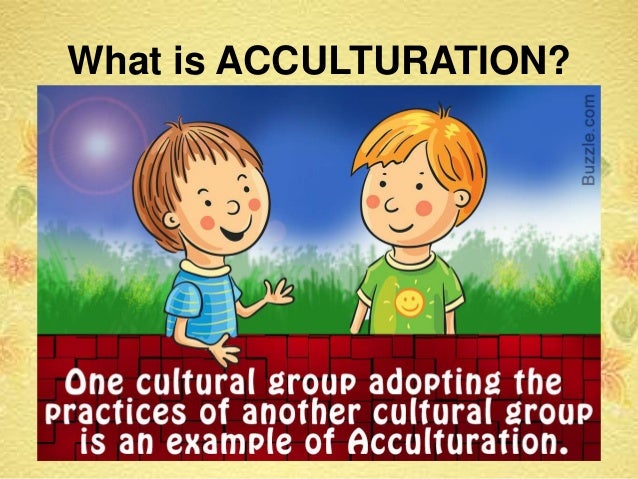
Acculturation is a process of social, psychological, and cultural change that stems from the balancing of two cultures while adapting to the prevailing culture of the society. Acculturation is a process in which an individual adopts, acquires and adjusts to a new cultural environment.
Wikipedia
Lily, when I (HJ) found this word in your thesis, I must admit I had no idea what it meant. Which lead me to go research. Hence the description above from Wikipedia.
Well, HJ, very funny you said that. I didn’t know the word ‘acculturation’ when I started my study. Yes, studying acculturation helped me understand my own experience of going through that. It made so much sense after understanding it. I know see acculturation is the adaptation process to a new culture, and it is the choice of new comers to decide which part of culture they want to retain or adapt.
My journey of acculturation is an interesting one because I had few cultures to jaggle. For me, acculturation is a continuous negotiation and choosing which part of culture I want to retain, adapt, or create a new one! Isn’t this an interesting concept? It is not a simple straight decision making. In many occassions, it was try and error and try again.
My experience with this have been short term. When I’ve travelled and chose to live with locals and so I needed to learn, adopt and yes adjust to their culture.
I guess, yes, length of stay in that culture gives you opportunities to practice with that culture. More than that, it is your willingness to learn, adapt, and change. Research had shown that when a person can embrace both culture, they are less stressed about the differences and can celebrate both cultures.

An experience that stays with me today was on a trip to Bali. I chose to stay in Legian as I didn’t want to stay in the tourist resort of Kuta. I had been to Bali before, but it was for a trip through the Kintamani Mountains on road bikes. That was a trip of a life time. Another story.
I haven’t been to Bali before. It must be an advanture!!
On the particular trip I organised a private driver to take me to special places of significance to the Indonesian culture. Along the way I learnt much about the different sights. I could also communicate in Bahasa (local language) . This is a practice I always do when visiting countries as a sign of respect.
Wow, HJ. You must have learnt so many different languages.
I like to visit places where I have a local friend. I ask them to take me to resturants that they eat. I guess, I want to try their local food. I love food. It is another form of the culture.
So, where did the private driver took you?
At the first temple we came to the driver organised for our entry and ask me, very casually, “are you bleeding?” I was so shocked. No one has ever asked me that. It took me a moment or two to realise he was referring to “menstration”. Still shocked, yet I was in my 30-s and aware that women with their periods are ostracised in some cultures. I was in their country and I will always respect the culture and their practices. Luckily I “was not bleeding” and was able to explore the incredible structure and learn more about the history and significance of this.
For my experience in Australia, this was not a subject you discussed with men. And yet, when you are married or living with a man, it’s something you need to be able to talk about.
I think every culture have ‘taboo’ topics. I remember I had several topics that I felt uncomfortable discussing with my parents. For example, I wanted to sign the form for ‘organ donation’ but my mum didn’t agree with the idea. It was a topic we, as a family, never discussed before. She was surprised that I had such intention.
Cultural experiences for me in Australia included growing up with Greeks, Italians and Egyptians. They were all my neighbours and I so enjoyed learning about their cultures and how they were able to embrace the Australian culture.
That is very deiverse! Wow.
Australian society had told me the diversity of culture and how each people integrate them into their life, which creates another ‘new’ culture. As no one person is same in this world, I call that ‘uniqueness’. No one person experience the life in the same way as you. I believe it is the Australian culture that allowed me to embrace who I am and have a choice in how I want to be.
The differences between people need not act as barriers that wound, harm and drive us apart. Rather, these very differences among cultures and civilizations should be valued as manifestation of the richness of our shared creativity.
Daisaku Ikeda

I struggled with what I was lead to believe was what a woman was supposed to be, and how to behave was my experience rather than perhaps and cultural thing. I’ve been through so many changes to what I’ve seen as culture in Australia in my 65 years. Thankfully in many areas it’s become more about freedom for all and acceptance of our differences and yet we still have a long way to go.
Yes, many things takes time to change. I don’t think we can change a culture or society overnight. I am also aware that if we don’t act, nothing will change. It takes some courage to step out of my comfortable zone and expanding it each day.
What may look like a small act of courage is courage nevertheless. The important thing is to be willing to take a step forward.
Daisaku Ikeda
As an Australian I see our culture embrace and include different cultures who choose to live here who follow our beliefs and cultural structures and “rules”. Those who choose not to follow or conform are ostracised as a whole. That I find so unfair and so not “Australian”. For me, to accept and welcome all peoples and unless their practices breach human rights globally, then let’s allow all to live as they choose. As long as there is justice for all and no one is abused, be it parent, child, teacher, anyone.

Your question Lily when does it stop, or when are we “Acculturated” Is such a great question. I don’t really know. I travel so much overseas and here in Australian and I find different “rules” all over the place.
I believe there is no end to acculturation. As we live in a multicultural society, diversity of all walks of life, we are always encountering new perspectives. Life will be so boring when we stop interacting with others.
For me it’s to stay open and discover first what, why, when and how before choosing to challenge the culture. In many cases it’s not my role to do that and I believe if I don’t agree, then do what I can if it’s a breach of a persons human rights or leave if it’s just about me not fitting in based on my knowledge, beliefs and values.
I agree with you HJ.
Also, for me, I ask myself every time when I have an alternative perspective to others.
Why am I think what I am thinking?
Why am I feel how I feel?
Why is it important for me to validate that concept?

 In Conversation